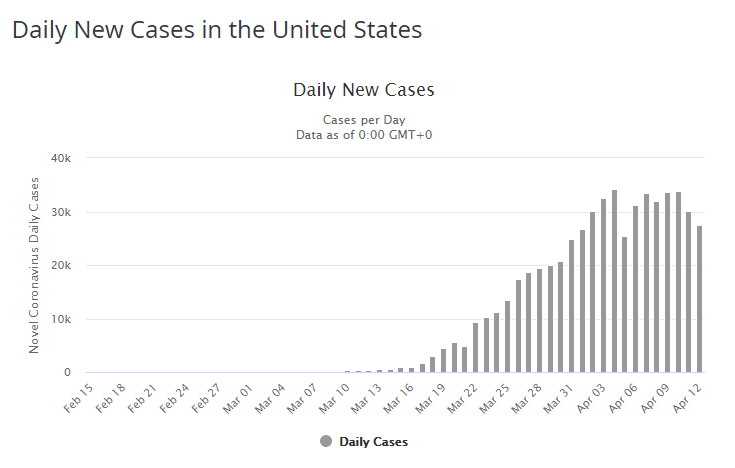
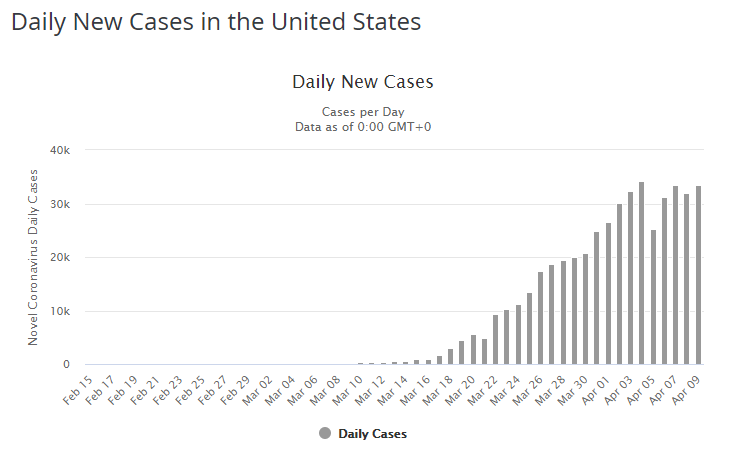
Well, I admit it, my optimistic interpretation of the data was incorrect. I felt strongly that April 4 was the peak of new cases in the US and that stayed true until April 24 when we had a spike of 38,ooo+ new cases reported.
Perhaps that is due to broader availability of testing, which is finding more individuals who test positive for coronavirus. However, the optimist in me did find a brilliantly shining piece of good news – April 26 – the number of new cases reported was 26,509; the 4th lowest daily new cases since April 1.
But my prediction that we’d be dancing around the MayPole on May 1 will not be the case. Yes, some states will be easing restrictions on May 1, but not to the extent I’d hoped. We have to continue to be wise and listen to the scientists, review the data and go forward cautiously. 14 days from April 24 is May 8 and my new prediction (like economists know, if you keep changing your forecast, you’ll eventually be right) is that by May 8, we’ll be having 10,000 or fewer new daily cases. Be optimistic – let’s make optimism be contagious!
The world certainly has changed in the last few months. A big part of life is our relationships and interactions with others. With quarantining and social distancing, that has blocked this part of our lives. Some might say that introverts are loving this time and some might be. More than likely their lives (work and personal) require some personal interaction and as such they’re also feeling some angst.
What it is doing is teaching us how to do things in new ways. Both at work and in my personal life, I’ve noticed a few things:
the use of Zoom, Google Hangouts, Free Conference Call, FaceTime and other virtual meetings wherein we can see each other; families I know of are having these weekly
Large conferences are holding their already planned meetings such that they’re all online, using the above tools as well as pre-recording content to air while allowing live interaction during the pre-recorded presentation
Interesting to note that this format actually appears to provide more intimate participation in the event – wherein some people wouldn’t ask a question in a room of 200 people, quite easy to type in your question into the message board tool
Connectability is still available – if you are watching a talk you like, while on the meeting, you can look at the speaker on LinkedIn, learn more about them and if valuable, send them a LinkedIn request.
I have held two virtual FOCM meetings so far;
one with the political wing of FOCM. There are 6-8 of us who have been emailing on political topics for probably 10 years. Two weeks ago we had a GoogleHangout, where some of us got to “see” each other for the first time.
the other with the Philadelphia metro FOCM chapter last week. We had about 8 attend.
I’m having one this Thursday with the Raleigh-Durham metro chapter.
The minutes of the Philadelphia FOCM meeting are:
Last night, the 16th day of April, 2020, a virtual FOCM Philadlephia area meeting was held via Google Hangout.In attendance: Pete Nieto, Dave Gibboni, Mike Strand, Bryan Clayton, Mark Eberhart, Christian McCracken, Chris McArthur, Ryan Gibson Topics discussed: too much couple together time could result in strained marriages and possible divorce; alcohol consumption was visible (bts, the meeting was not recorded), predictions of return to the new normal (end of June was voiced), Arena International meetings status – virtual; DIA annual – virtual; BIO annual – virtual; ASCO annual – virtual.
While, in my opinion, we’re very close to moving to a policy of unquarantining everyone and quarantining only the at-risk, the symptomatic and those who test positive (as seen in my video blog below), some of these changes we’re being forced to make will continue and that’s not necessarily a bad thing.
April 4 is standing tall as the peak day of new coronavirus cases in the US. We’re now 8 days since that date. Looking at data from other countries, shows that in day 10 – 14 from peak the number of new daily cases is around 20% of the peak.
With over 2,000 patients in clinical trials of drugs that have solid promise based on pre-clinical data, those patients will likely be contagious for shorter periods of time reducing the transmissibility and blunting the number of new cases. Also, the prescribing of hydroxychloroquine and azithromycin in early published trials shows elimination of the virus by day 5 whereas patients with no treatment are still positive for 10-12 days. This, too is probably a significant reason for the decline since April 4.
I truly believe pharmaceutical intervention is playing a big role in flattening the curve. Let’s remember that the US pharmaceutical industry is one of America’s greatest assets and is an important part of our excellent and effective healthcare system.
Well, as you know if you keep changing your prediction you’ll eventually be correct. I had optimistically hoped that the number of new cases would have peaked by March 31; however, I missed it by 5 days. The peak, I believe, occurred on April 4 and in analyzing other countries, by day 10 from the peak, the number of new daily cases will be halved.
Call me an optimist – because I am one. With so many patients being treated in clinical trials with several drugs and vaccines and the availability of the safe (on the market since 1955, side effects well known and manageable) hydroxychloroquine, either alone or in combination with azithromycin, the duration of illness is declining in thousands of patients. This reduces the time they’re contagious. That coupled with social distancing and warmer weather will soon have us back to our new normal.
I think we can all gather around the May pole on May 1 (no one seems to do this any more, do they?) and skip around it, singing, “I’d like to buy the world a coke”. I do recall skipping around a May pole in elementary school. What was the purpose? What is a May pole? Questions for another time perhaps. Or feel free to use the comments section to post a reply.
It is now time to unquarantine all of us and move to quarantining just those who test positive, those who have symptoms or who have had recent contact with someone who tested positive.
And let’s start buying stuff so heavily from one country, maybe even make stuff in America again. I’ve been looking for a toaster oven made in any country but China – no can find!
Okay, so here we are on 3/31, day 15 + 1 from the 15 day social distancing edict. We’ll have to wait a few more days to see if my prediction that our nation-wide effort will result in the US hitting its peak by 3/31. is accurate. It is encouraging to see that the number of daily new cases is increasing but at a decreasing rate. Only 400 new cases reported yesterday.
Troubling though is the quick rise in a few large cities: Detroit, New Orleans, for example.
My day 10 observation of the number of new cases and the groundswell of support for the male identifying members of our society to cease shaving their facial hair until we have two consecutive days of a decline in the number of new cases of the corona virus in the US.
Several good signs in the data, many EU countries have recorded a one day drop from their peak of new cases and two countries have had a two day drop, suggesting that globally we may have hit the peak.
Disclaimer: I am no epidemiologist, but I did stay at a Holiday Inn Express in Burlingame, CA earlier this month. Importantly, I am an optimist with a bit of experience as a data analyst.
I am doing two things in regards to global Covid-19 virus event. First, I am not shaving my facial hair until we have two days in a row of new cases in the US increasing at a decreasing rate. I think that’s the same as having two days after the peak number of reported cases.
Second, since Day 6 I have been giving snippets of my analysis on youtube.
I have learned how to show the beard’s progress without having to do each day’s session in two video snippets. Day 9 is below:
I believe that the combination of hydroxychloroquine and azithromycin will be extremely helpful in flattening the curve and getting the country back to normal. Provided that there’s sufficient quantity of these drugs and if not, that generic companies fire up their plants and start cranking this out. Knocking the virus out in 3-6 days in early studies will reduce transmission to others and reduce the projected number of deaths. My prediction is that in the US we’ll reach our peak number of daily new cases by or before March 31. I am hopeful that we’ll be back to going to work in our offices and dining out the week of April 7.
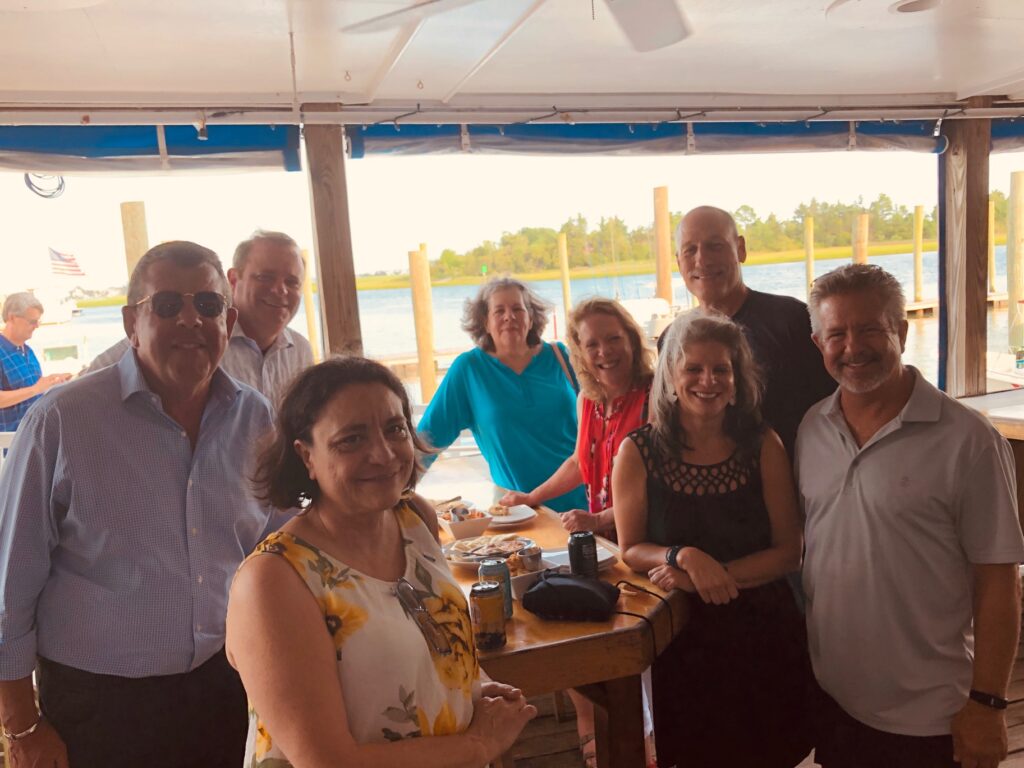
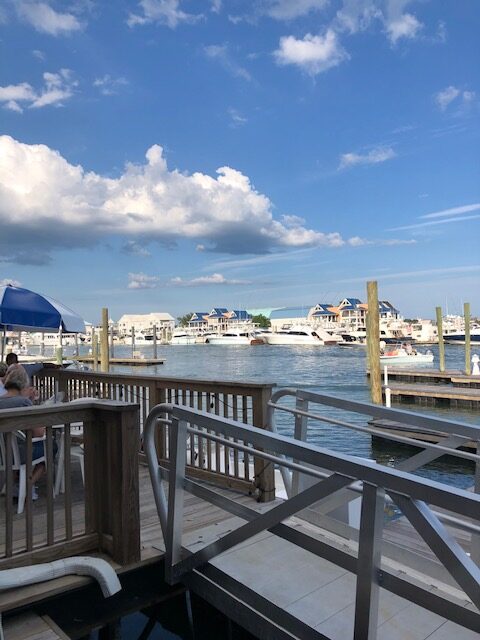
The July networking event for the Wilmington Pharma/Bio/CRO Networking Group was held at Dockside in Wilmington. Dockside is located on the west side of the IntraCoastal Waterway. This is the site for this group’s events in the summertime. Wilmington Pharma/Bio/CRO Networking Group can be found on LinkedIn where updates to monthly events are posted.
Fortunately someone snapped a photo at some point so that we have some record of attendance. Not that attendance is ever taken and far too often we forget to take a picture.
L-R: John Cline, Lee King, Andrea Young, Jennifer Hutchison, Jackie Bilobran, Gayle Grandinetti, Chris Smith, Chris Matheus
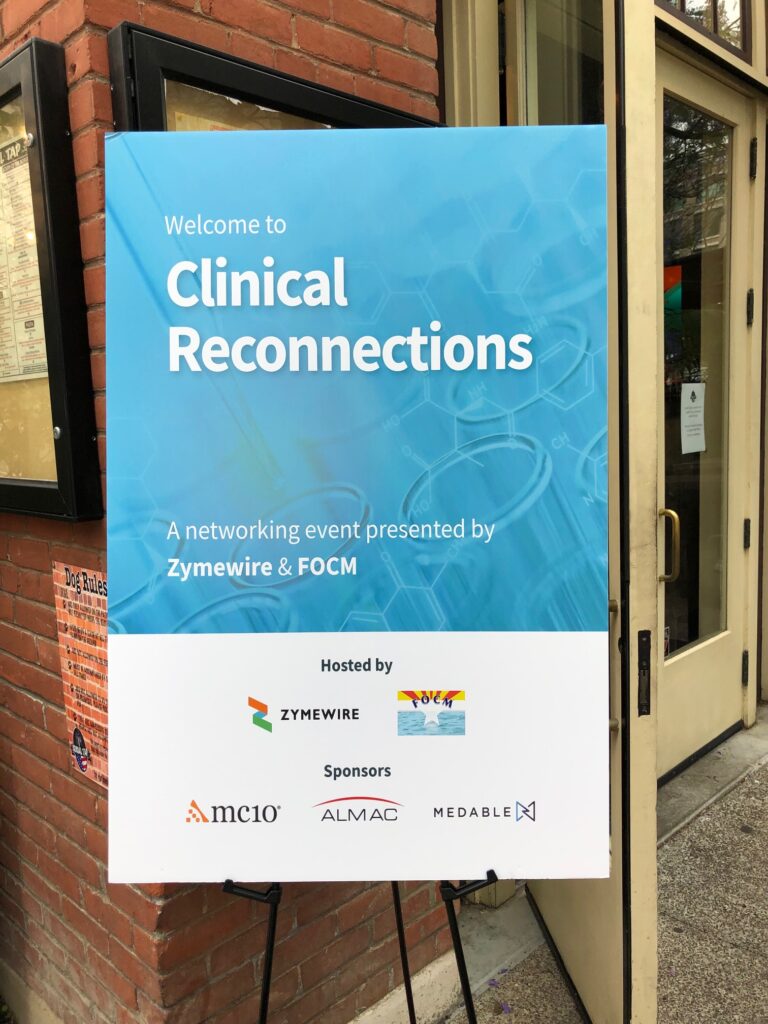
The annual Drug Information Association (DIA) conference in 2019 was held in San Diego June 23 – 27. It was a busy, busy conference making it memorable and historic. On Sunday night FOCM, Zymewire along with Almac, MC10 and Medable hosted “Clinical Reconnections”, the pre-DIA networking event at Social Tap Eatery. This was the 4th year of this event. Over 320 people attended.
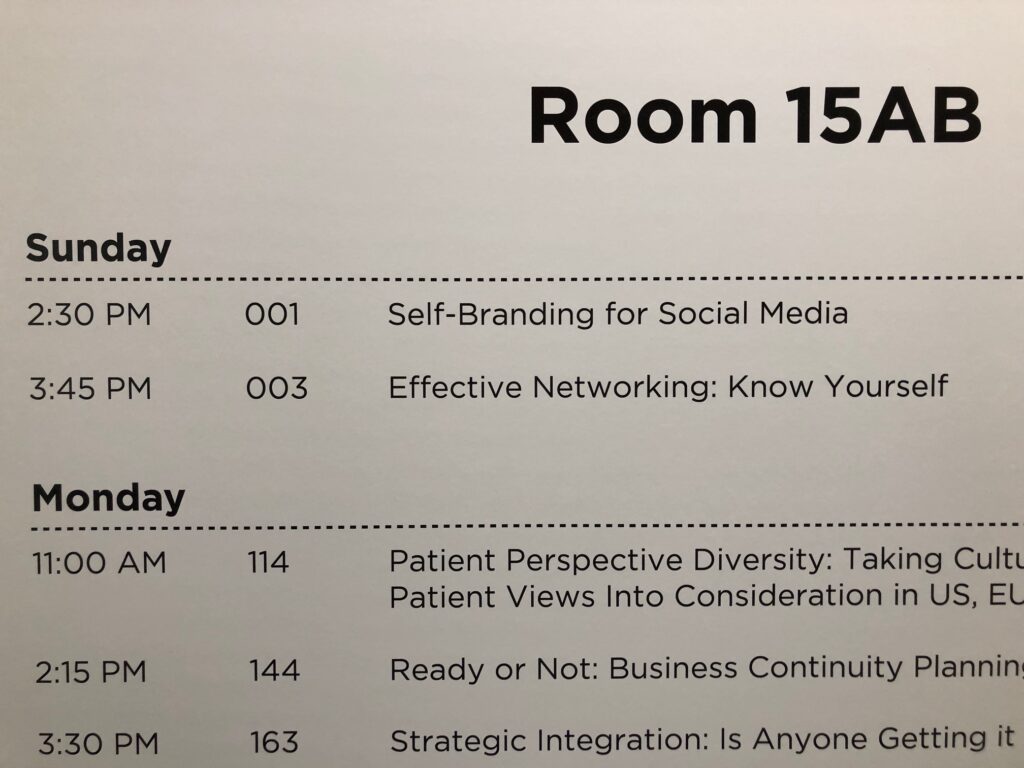
Along with Michele Sacher, we presented on Self-Branding for Social Media. We added Christina Cantrell for the next workshop on the importance of knowing yourself for effective networking.
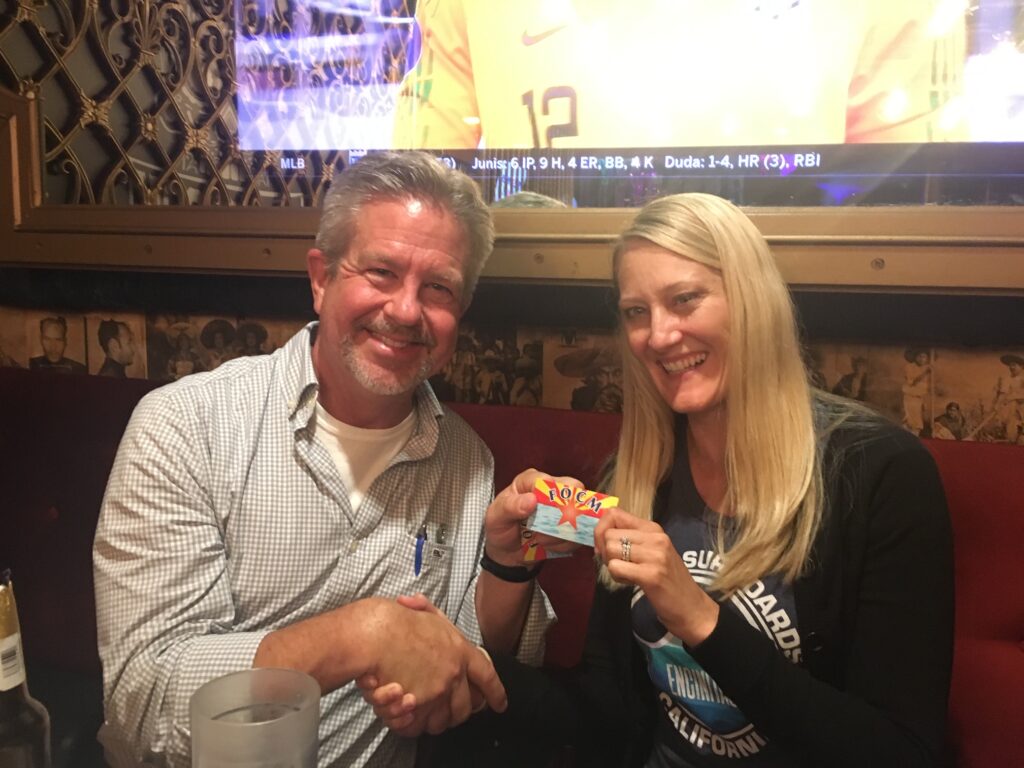
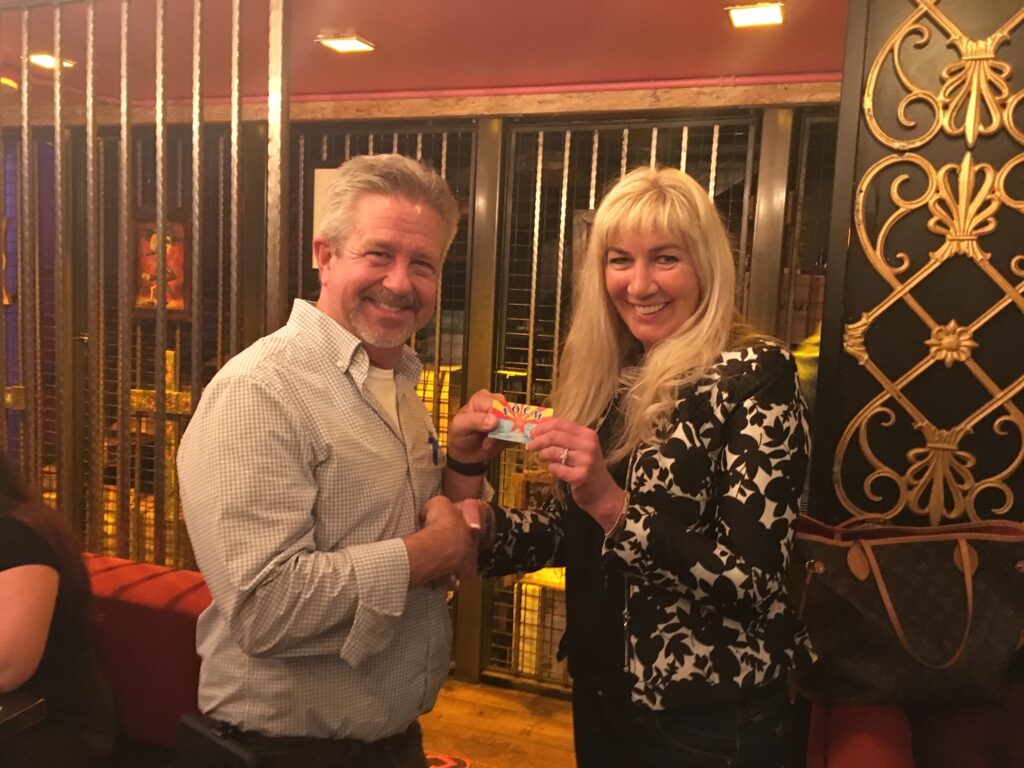
Several months ago I posted about Jodi Andrews receiving her FOCM card. There were two other card ceremonies, one each for Meghan Alonso and Rhonda Rusinski. I’ve known Rhonda from the early 2000’s having met while we were both working at ICON Clinical Research. Meghan had recently joined Clinipace and she asked her colleagues who would be a good person to connect with, someone known as an industry connector. They directed her to me. It was a pleasure to welcome them both into the organization.
Sunday Professional Development Workshops
Clinical ReconnectionsMeghan Alonso FOCM Card Ceremony